Nobel Prize in Physics 2026: Francis Halzen and the Discovery of Cosmic Neutrinos
Category: Space Technology
Date: 10 Oct, 2026 | 11 views
The Nobel Prize in Physics 2026 has been awarded to Francis Halzen, a physicist at the University of Wisconsin–Madison in the United States, for his decisive contributions to the IceCube Neutrino Observatory and the discovery of high-energy neutrinos of astrophysical origin.
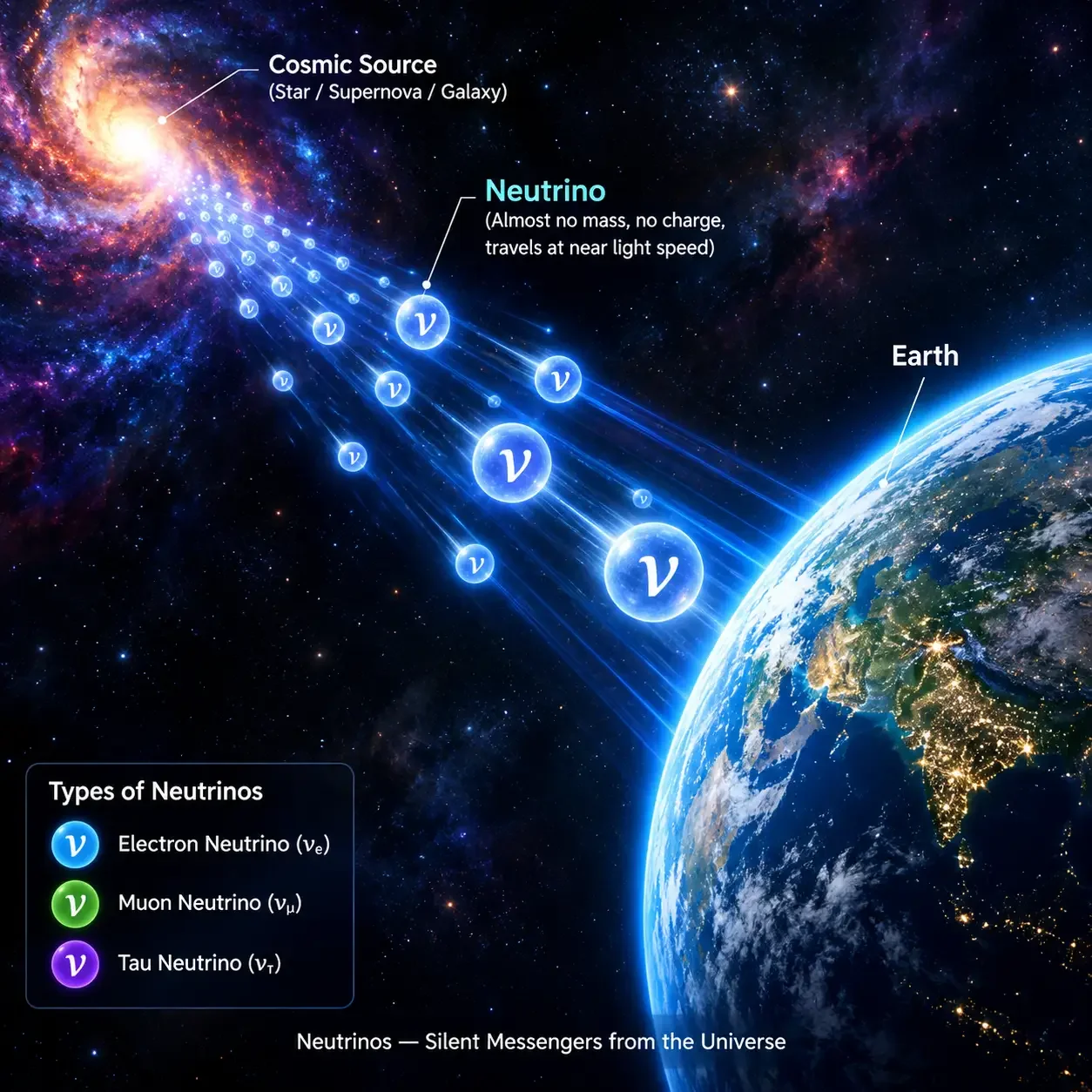
His work has opened a new window into the universe by helping scientists detect mysterious particles known as neutrinos, which travel across enormous distances from some of the most energetic environments in space.
Neutrinos are often called ghost particles because they can pass through planets, stars, and human bodies without interacting with ordinary matter. By studying these particles, scientists can investigate distant cosmic events that are difficult to observe using conventional telescopes.
Who Is Francis Halzen?
Francis Halzen is a Belgian-born theoretical and particle physicist who became a professor at the University of Wisconsin–Madison in the United States.
Born in 1944 in Tienen, Belgium, Halzen earned his PhD from KU Leuven in 1969. Throughout his career, he worked to understand fundamental particles and the high-energy processes occurring throughout the universe.
His most influential contribution was helping turn an ambitious scientific idea into reality: using the enormous volume of Antarctic ice as a detector for high-energy neutrinos arriving from space.
The 2026 Nobel Prize recognizes his scientific vision, leadership, and contributions to making neutrino astronomy a powerful method for studying the universe.
What Are Neutrinos?
Neutrinos are tiny subatomic particles with no electric charge and an extremely small mass. They interact primarily through the weak nuclear force, which makes them exceptionally difficult to detect.
They are produced by several natural processes, including:
Nuclear fusion inside the Sun and other stars.
Explosions of massive stars.
Radioactive decay and nuclear reactions.
High-energy interactions involving cosmic rays.
Powerful astrophysical environments associated with black holes and active galaxies.
Because neutrinos interact so weakly with matter, they can travel vast distances through space without being significantly deflected or absorbed.
This property makes them valuable messengers of distant cosmic events.
What Is the IceCube Neutrino Observatory?
The IceCube Neutrino Observatory is a massive scientific facility located at the South Pole in Antarctica. It uses approximately one cubic kilometre of clear glacial ice as a detector.
The observatory contains thousands of light sensors embedded deep beneath the ice. These sensors are designed to detect faint flashes of light produced when a neutrino interacts with matter and creates charged particles.
The project was completed in 2011, following years of planning, research, engineering, and construction.
The Antarctic environment provides several advantages. The deep ice shields the detectors from many unwanted signals, while its transparency allows scientists to observe faint light produced by particle interactions.
IceCube has enabled researchers to detect high-energy neutrinos originating beyond our Solar System and investigate their possible sources.
How Did Francis Halzen Contribute to the Discovery?
1. An ambitious idea in 1988
In 1988, Francis Halzen presented the vision of using the ice at the South Pole to detect high-energy neutrinos.
The challenge was enormous. Neutrinos rarely interact with matter, meaning a detector would need to contain an immense volume of material to capture enough interactions for scientific study.
Halzen recognized that the natural ice of Antarctica could provide the enormous detection volume required.
2. Turning Antarctic ice into a scientific detector
Scientists and engineers developed a system of light sensors that could be installed deep inside the ice.
When a high-energy neutrino interacts with an atomic nucleus, it can produce charged particles that travel through the ice and emit Cherenkov light. The sensors detect this light and record its timing and intensity.
Researchers use these measurements to reconstruct the direction and energy of the incoming particle.
Building such an observatory required international cooperation, advanced detector technology, and years of work in one of Earth's most challenging environments.
3. Detecting high-energy neutrinos
After IceCube became operational, researchers identified evidence of high-energy neutrinos originating from cosmic sources.
In 2013, the IceCube Collaboration reported the first evidence of extremely high-energy astrophysical neutrinos. Subsequent observations strengthened the conclusion that these particles were arriving from beyond the Solar System.
This was a major breakthrough because it established neutrinos as a new way to investigate the universe's most energetic phenomena.
4. Connecting neutrinos with distant cosmic sources
Neutrinos can travel from their origins without being deflected by magnetic fields. Unlike electrically charged cosmic rays, they can preserve directional information about the environments where they were produced.
In 2017, an IceCube neutrino detection was associated with a flaring active galactic nucleus, a powerful region surrounding a supermassive black hole. This provided important evidence connecting astrophysical neutrinos with energetic objects beyond our galaxy.
These discoveries have helped establish neutrino astronomy as a complementary approach to observing the universe.
Why Did Francis Halzen Win the Nobel Prize in Physics 2026?
The Nobel Prize was awarded to Francis Halzen for his decisive contributions to the IceCube Neutrino Observatory and the discovery of high-energy neutrinos of astrophysical origin.
The achievement is important for three main reasons.
First, it created a new way to study the universe. Scientists can now use neutrinos alongside light, gravitational waves, and other cosmic messengers to investigate distant events.
Second, it provides clues about powerful cosmic accelerators. High-energy neutrinos can help researchers understand how particles gain enormous amounts of energy in extreme astrophysical environments.
Third, it opens new scientific possibilities. Continued observations may reveal previously unknown cosmic sources and improve our understanding of black holes, active galaxies, and the origins of high-energy cosmic rays.
The award recognizes not just the detection of an elusive particle, but the scientific vision and sustained effort required to make an entirely new form of astronomy possible.
How Are Neutrinos Different from Light?
Traditional astronomy primarily observes electromagnetic radiation, including visible light, radio waves, X-rays, and gamma rays.
Neutrino astronomy offers a different perspective.
Light can be absorbed, scattered, or blocked by material along its path. Neutrinos interact so weakly that many can travel through dense matter and enormous cosmic distances with little interference.
As a result, neutrinos can carry information from environments that may be difficult to study through light alone.
Combining neutrino observations with conventional telescopes helps scientists build a more complete picture of cosmic events.
What Does This Discovery Mean for Humanity?
The discovery of high-energy astrophysical neutrinos represents an important advance in our understanding of the universe.
Research using IceCube may help scientists answer questions such as:
Where are the most powerful natural particle accelerators located?
How do black holes and active galaxies produce high-energy particles?
What processes generate the highest-energy cosmic rays?
What can neutrinos reveal about the evolution of the universe?
Are there cosmic phenomena that have not yet been identified through other forms of observation?
Although these questions remain under investigation, neutrino astronomy has already provided scientists with a new tool for exploring the cosmos.
The Future of Neutrino Astronomy
Research is continuing to improve neutrino detectors and expand their scientific capabilities.
Future projects, including the proposed IceCube-Gen2 expansion, aim to increase the volume of instrumented ice and improve the detection of rare, high-energy neutrinos.
Larger and more sensitive observatories could help scientists identify more neutrino sources and study them in greater detail.
As researchers combine neutrino observations with information from telescopes around the world, the field of multi-messenger astronomy is expected to reveal new insights into the universe's most energetic events.
Conclusion
The 2026 Nobel Prize in Physics recognizes Francis Halzen's pioneering contributions to the IceCube Neutrino Observatory and the discovery of high-energy neutrinos from astrophysical sources.
His vision of using Antarctic ice to detect these elusive particles helped transform a challenging scientific proposal into a powerful observatory.
By studying neutrinos, scientists can investigate distant galaxies, energetic cosmic events, and the fundamental processes that shape the universe.
Francis Halzen's achievement demonstrates how persistence, innovation, and international scientific collaboration can open entirely new paths to discovery.
The ghost particles that once seemed almost impossible to detect are now helping humanity explore some of the deepest mysteries of the cosmos.
Related Posts in Space Technology
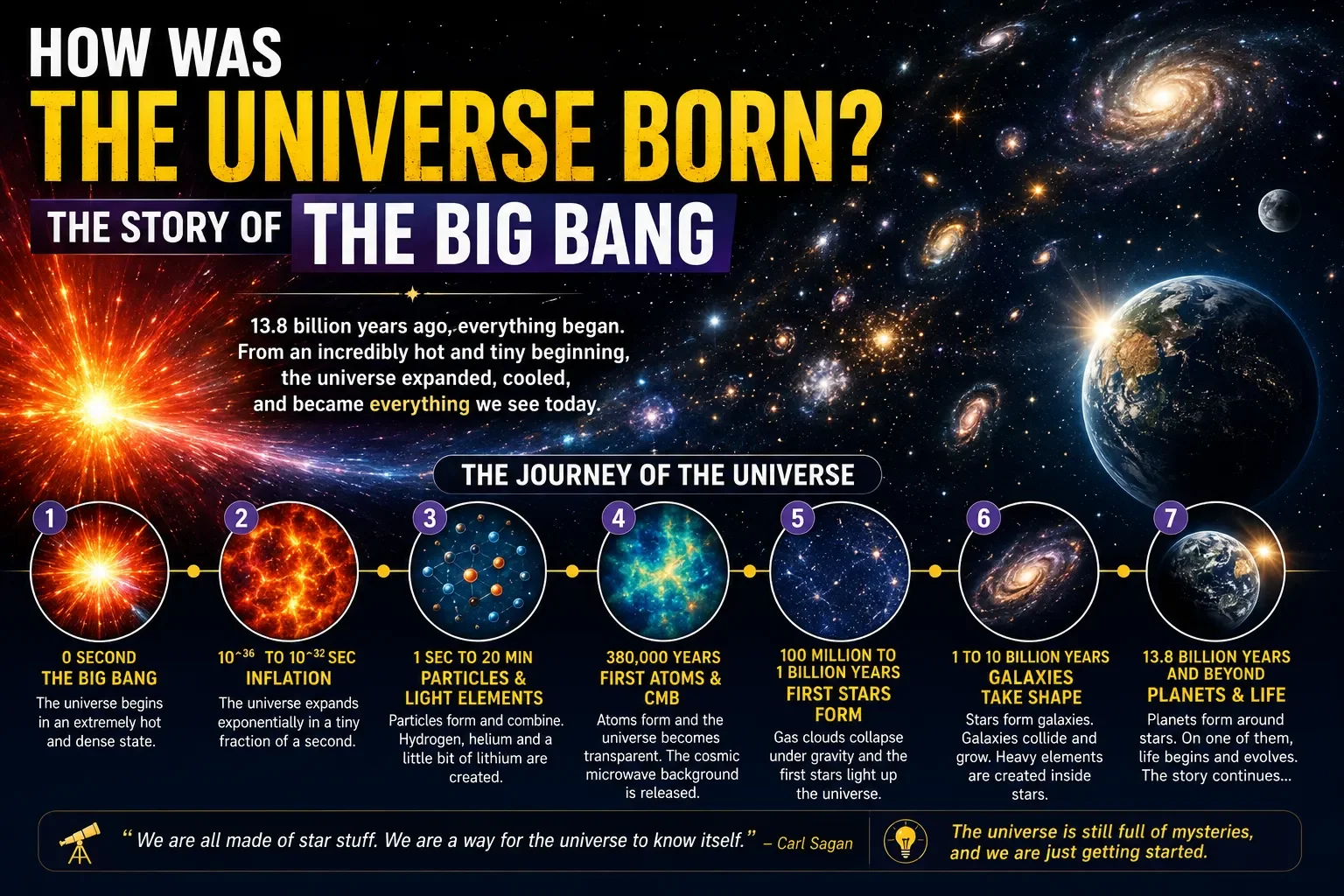
How Was the Universe Born? The Story of the Big Bang
17 Aug, 2026Imagine a time when there were no stars, no planets, no galaxies, no Earth—and not even the famili…

Moon Missions: How Many Have Reached the Moon, Who Sent Them, and What Did We Discover?
17 Aug, 2026Discover how many missions have explored the Moon, which countries sent them, what they discovered, …
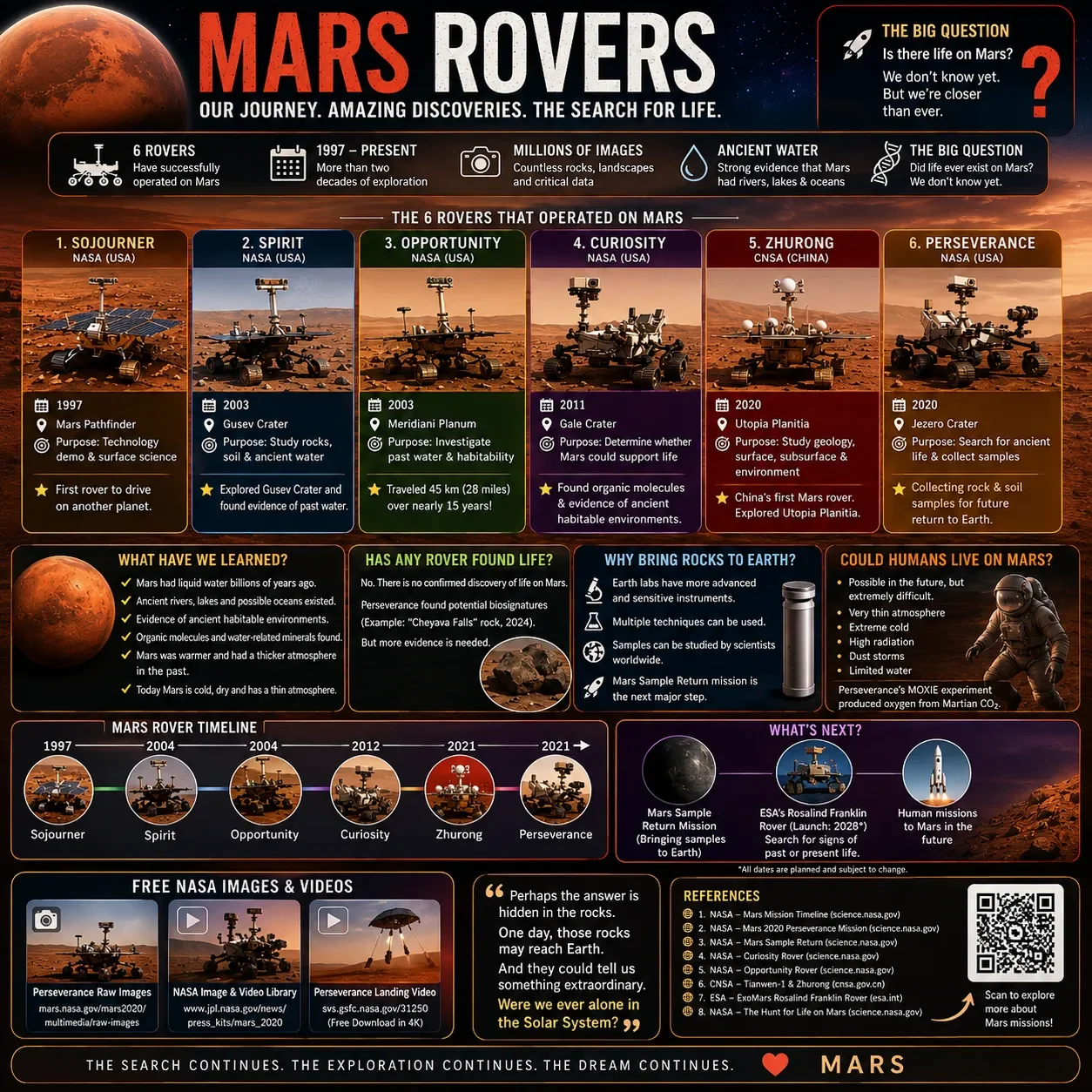
Mars Rovers: How Many Have Reached Mars, What Did They Discover, and Could Life Exist There?
17 Aug, 2026Mars has fascinated humans for centuries. Its reddish surface, ancient river-like channels, polar ic…
Reviews (0)
No reviews yet. Be the first!
Leave Feedback
Categories
- Space Technology 4
- AI & Prompt Engineering 3
- Tuition & Coaching 2
- Class 10 Tuition 2
- Online Classes 2
- Art & Craft 2
- Yoga 2
- Design & Multimedia 2
- Medical Entrance Coaching 1
- GRE Coaching 1
- Photography & Videography 1
- Cloud Computing (AWS, Azure, GCP) 1
- Data Science & Analytics 1
- Painting 1
- Digital Marketing & SEO 1
- Quantum Computing 1
- Web Development 1
- DevOps & CI/CD 1
- Exam Preparation 1
- Cooking 1
Tags
Recent Posts
Nobel Prize in Physics 2026: Francis Halzen and the Discovery of Cosmic Neutrinos
10 Oct, 2026
The Path Beyond Suffering: Buddha’s Four Noble Truths, the Eightfold Way, and the Journey to Nirvana
02 Oct, 2026
Indian Philosophy and Philosophers: A Journey Through India’s Timeless Wisdom
30 Sep, 2026
GRE Coaching: Complete Guide to GRE Preparation, Classes, Fees & Career Opportunities
21 Aug, 2026
How Was the Universe Born? The Story of the Big Bang
17 Aug, 2026