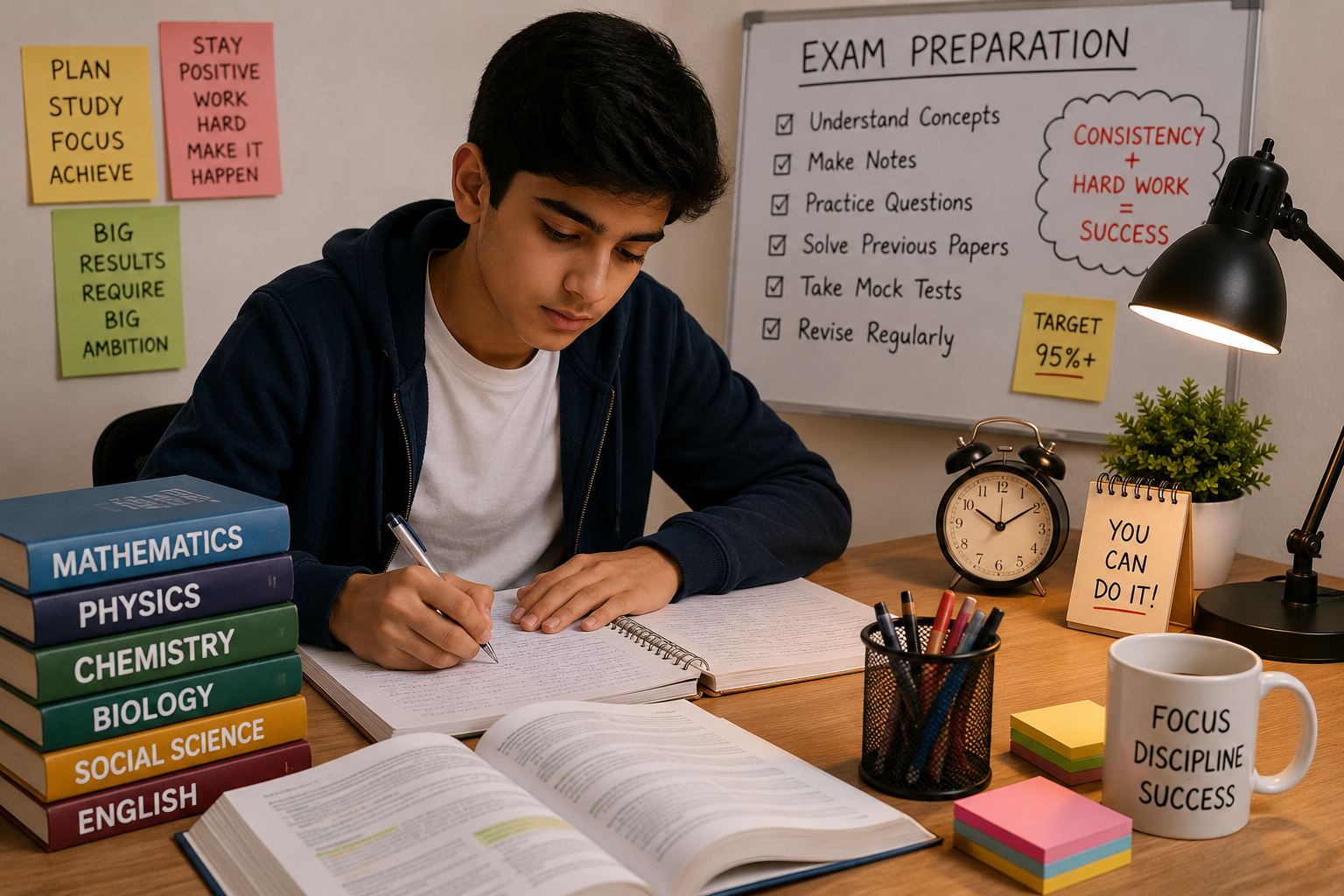
CBSE Board Class 10th & 12th Exam Preparation Tips: A Complete Guide to Score Higher Marks
Category: Class 10 Tuition
Date: 02 Jun, 2026 | 159 views
Preparing for the CBSE Board Class 10th and Class 12th examinations is one of the most important milestones in every student's academic journey. These exams not only determine your academic performance but also play a crucial role in shaping your future career. With proper planning, smart study techniques, and consistent practice, every student can improve their performance and achieve excellent marks.
This comprehensive guide will help CBSE students prepare effectively and confidently for the board examinations.
Why CBSE Board Exams Are Important
The CBSE (Central Board of Secondary Education) board examinations are recognized across India and by many international institutions. A good score can help students secure admission to top colleges, universities, and professional courses.
Benefits of scoring well include:
- Better admission opportunities
- Higher confidence
- Scholarship eligibility
- Strong academic foundation
- Improved career prospects
Understand the Latest CBSE Syllabus
The first step in board exam preparation is to thoroughly understand the latest CBSE syllabus. Students should:
- Download the updated syllabus.
- Identify important chapters.
- Focus on high-weightage topics.
- Remove deleted topics from preparation.
Studying according to the official syllabus saves valuable time and improves efficiency.
Create a Realistic Study Timetable
A well-planned timetable helps students manage time effectively.
Sample Daily Study Plan
- Mathematics – 2 Hours
- Science – 2 Hours
- Social Science/Commerce – 1.5 Hours
- English – 1 Hour
- Hindi/Additional Language – 1 Hour
- Revision – 1 Hour
- Mock Test Practice – 30 Minutes
Always include short breaks between study sessions to maintain concentration.
Study NCERT Books First
NCERT textbooks are the foundation of CBSE board examinations. Most board questions are directly or indirectly based on NCERT concepts.
Students should:
- Read every chapter carefully.
- Solve all back exercises.
- Practice examples.
- Revise diagrams and formulas.
Only after completing NCERT should students move to reference books.
Practice Previous Year Question Papers
Previous year papers help students understand:
- Question patterns
- Frequently asked questions
- Marking scheme
- Time management
- Important concepts
Try solving at least the last 5–10 years' papers under exam conditions.
Solve Sample Papers Regularly
Sample papers improve:
- Writing speed
- Accuracy
- Confidence
- Time management
- Exam strategy
Evaluate your answers after every test and identify weak areas.
Prepare Subject-Wise
Mathematics
- Practice daily.
- Memorize formulas.
- Solve different types of questions.
- Improve calculation speed.
Science
- Understand concepts instead of memorizing.
- Practice diagrams.
- Revise definitions and numerical problems.
Social Science
- Prepare timelines.
- Practice maps.
- Learn important dates and events.
- Write concise answers.
English
- Improve grammar.
- Read comprehension passages.
- Practice writing skills.
- Learn important formats.
Hindi
- Revise grammar rules.
- Practice essay writing.
- Improve reading comprehension.
- Learn important literary themes.
Make Short Revision Notes
Prepare concise notes containing:
- Formulas
- Definitions
- Important dates
- Diagrams
- Keywords
- Mind maps
These notes are extremely useful during the final revision.
Focus on Time Management
During the examination:
- Read the question paper carefully.
- Attempt easier questions first.
- Allocate time for each section.
- Leave the last 15–20 minutes for revision.
Good time management can significantly improve your score.
Avoid Common Mistakes
Students should avoid:
- Studying without a timetable
- Ignoring NCERT books
- Skipping revision
- Last-minute cramming
- Poor handwriting
- Not attempting mock tests
Maintain Good Health
A healthy body supports a healthy mind.
- Sleep for 7–8 hours.
- Eat nutritious food.
- Drink enough water.
- Exercise regularly.
- Avoid excessive screen time.
Stay Positive and Motivated
Board exam preparation can be stressful, but maintaining a positive attitude is essential.
Remember:
- Stay consistent.
- Believe in yourself.
- Avoid comparing yourself with others.
- Learn from mistakes.
- Focus on continuous improvement.
Final Revision Strategy
In the last month before exams:
- Revise all subjects.
- Practice full-length mock tests.
- Review formulas and important concepts.
- Focus on weak topics.
- Avoid learning entirely new chapters.
Conclusion
Scoring high marks in the CBSE Class 10 and Class 12 board examinations is achievable with disciplined preparation, regular practice, and proper time management. Following the latest syllabus, mastering NCERT textbooks, solving previous years' question papers, and revising consistently will greatly improve your confidence and performance.
Success in board exams is not about studying longer—it's about studying smarter. Stay focused, stay healthy, and believe in your preparation. With dedication and the right strategy, you can achieve excellent results.
Frequently Asked Questions (FAQs)
1. How many hours should a CBSE board student study daily?
Students should study approximately 5–8 focused hours daily, depending on their preparation level.
2. Are NCERT books enough for CBSE board exams?
Yes. NCERT books cover the majority of board exam questions and should be completed before using reference books.
3. How many sample papers should I solve?
Solve at least 10–15 sample papers and multiple previous year question papers before the examination.
4. Is revision more important than studying new topics?
Yes. Regular revision improves retention and helps students perform better in the examination.
5. How can I reduce board exam stress?
Maintain a healthy routine, revise regularly, practice mock tests, and stay positive throughout your preparation.
Related Posts in Class 10 Tuition
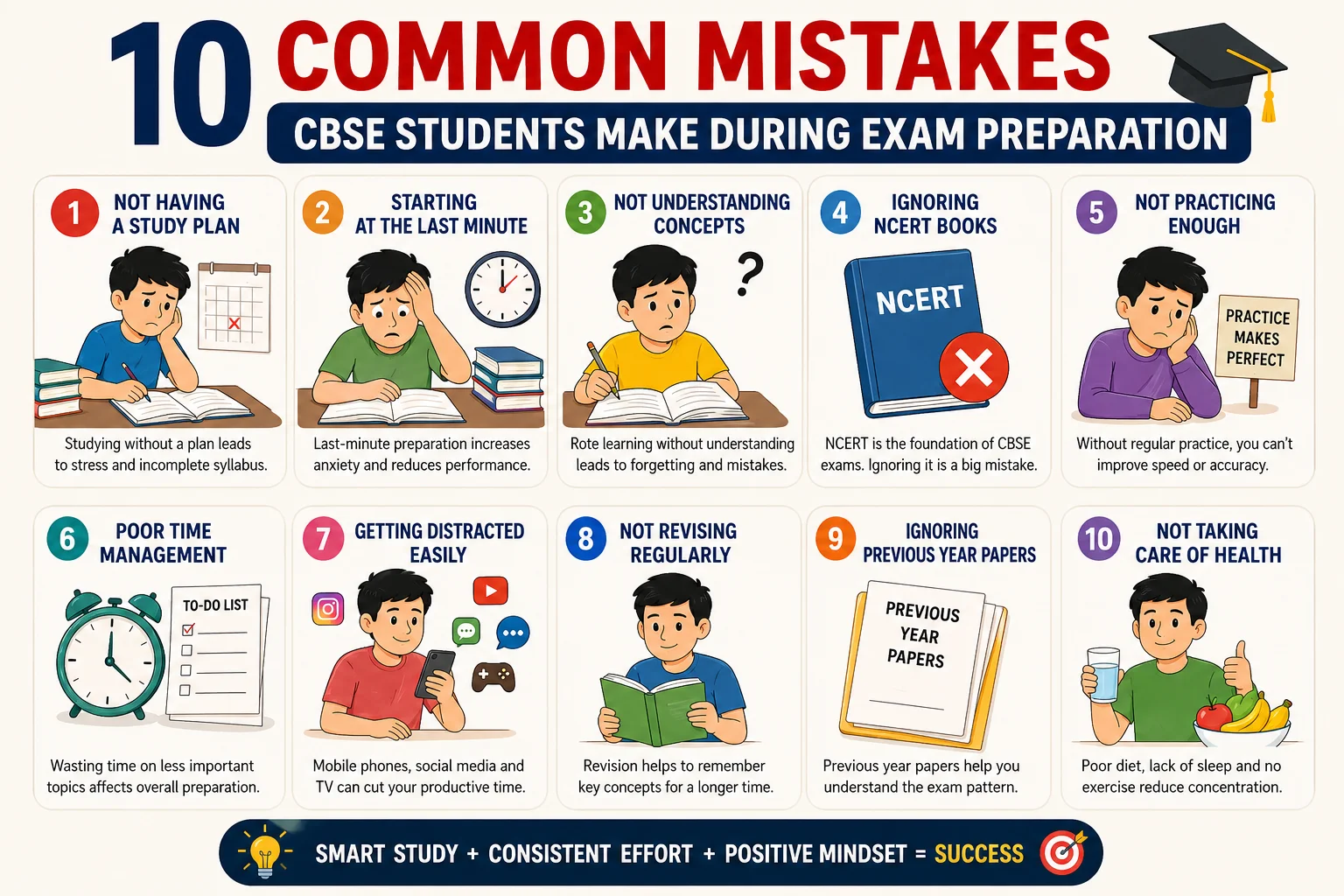
10 Common Mistakes CBSE Students Make During Exam Preparation
11 Jul, 2026Preparing for CBSE exams can be stressful, but many students lose marks not because they lack knowle…
Reviews (0)
No reviews yet. Be the first!
Leave Feedback
Categories
- AI & Prompt Engineering 3
- Space Technology 3
- Tuition & Coaching 2
- Class 10 Tuition 2
- Online Classes 2
- Art & Craft 2
- Design & Multimedia 2
- Medical Entrance Coaching 1
- GRE Coaching 1
- Photography & Videography 1
- Cloud Computing (AWS, Azure, GCP) 1
- Data Science & Analytics 1
- Yoga 1
- Painting 1
- Digital Marketing & SEO 1
- Web Development 1
- DevOps & CI/CD 1
- Quantum Computing 1
- Exam Preparation 1
- Cooking 1
Tags
No tags for this post.
Recent Posts

Indian Philosophy and Philosophers: A Journey Through India’s Timeless Wisdom
30 Sep, 2026
GRE Coaching: Complete Guide to GRE Preparation, Classes, Fees & Career Opportunities
21 Aug, 2026
How Was the Universe Born? The Story of the Big Bang
17 Aug, 2026
Moon Missions: How Many Have Reached the Moon, Who Sent Them, and What Did We Discover?
17 Aug, 2026
Mars Rovers: How Many Have Reached Mars, What Did They Discover, and Could Life Exist There?
17 Aug, 2026